
The Uncommonplace
A commonplace book is full of those shiny trinkets that you think are worth keeping—it’s a notebook, an anthology, a record of your life. The Uncommonplace is my own collection of essays on the things I read, the ideas they provoke, and the uncommon places they take me.
By Sierra Pilat
Gilead by Marilynne Robinson
by Sierra Pilat, September 17, 2026
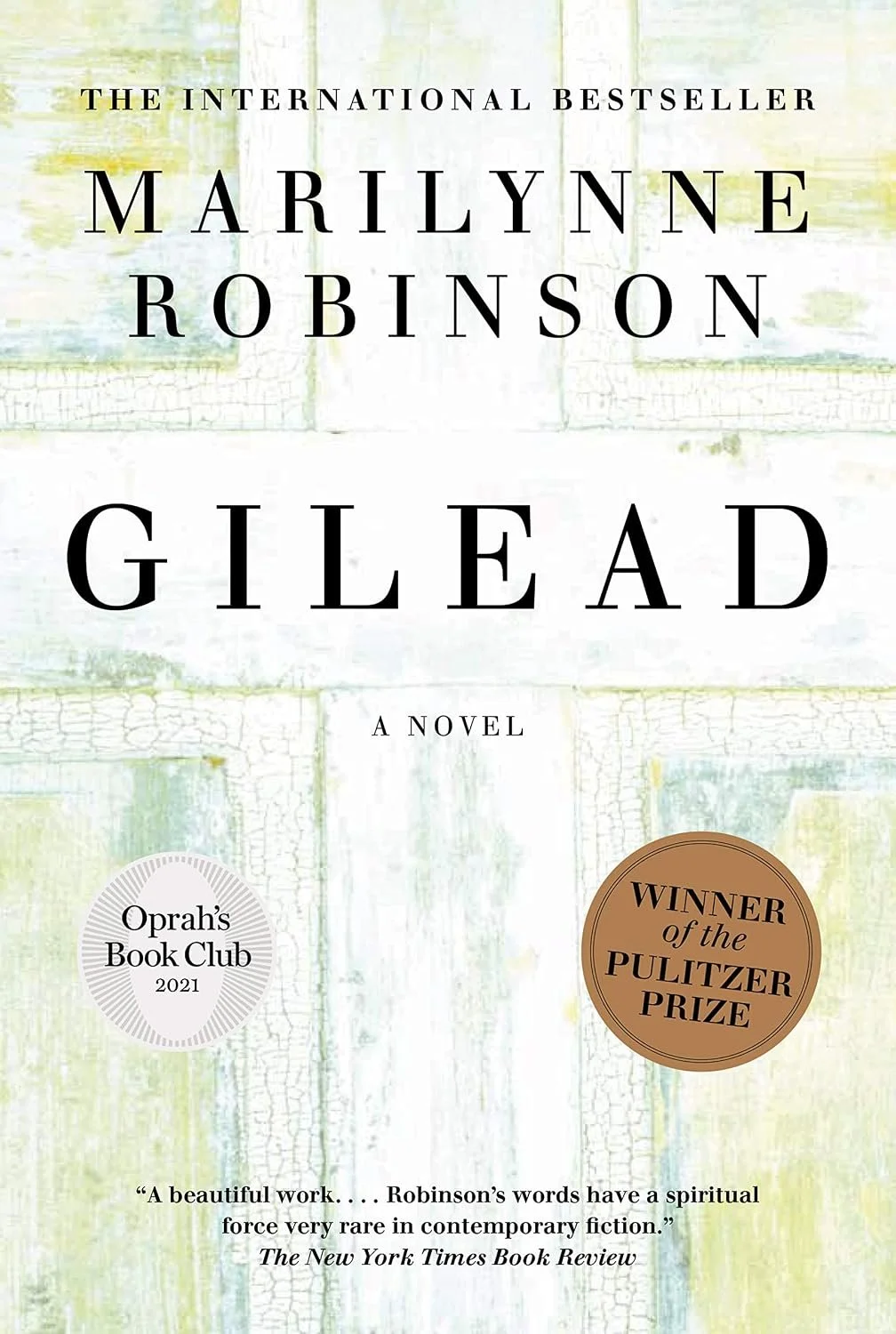
Lisa Tuchek’s review of The Palm House by Gwendoline Riley, which you can read here, struck me when she described how a book can creep up on you. Into you, really. As you turn the pages, you’re not even sure if you like what you’re reading, but something like an undertow pulls you beneath the surface. And then suddenly you’re on the last page, you’re done, and John Ames, your dear protagonist, is dead and gone.
I struggled to articulate the central question that was pulling me through reading this story. I had to resurface and breathe for a second. Now, I think it was this: what are you trying to say, Ames?
A couple of years ago, when I was newly married and my algorithm knew it, I saw an article that gave relationship advice. The author suggested that a couple, when they have a conflict, ought to spiral downward, circling the problem in ever-shrinking ringlets until they hit that central point, together, at rock bottom. The conflict becomes clear. A harmonious air is restored. But it feels like hell first, down there in that deep, dark pit.
I’m not sure how good that is, at least for our personal conflicts. To my mind, the spiral is Ames throughout Gilead—and it’s all of us who write our thoughts out for posterity. How often do I write a cutting, brilliant sentence and think Aha! I’ve got it now! I feel calm and restored until I return to my journal days later and wonder what in the world I was thinking. I continue to move around some point I can’t yet see, my frustration grows, and I never seem to reach the bottom.
I see there’s no need to be frustrated. Gilead and Ames teach me that it’s okay to chew the cud. That might bring out my essence, actually. I might get to see what I’m made of in all that mush gnashing between my teeth. That question—what is Ames trying to say at the root?---is not so important as this: What is Ames’s essence, and what can I learn from him?
He is a good man. A good Christian man. That is clear like sparkling glass. He knows, as I do, that he was created out of God’s infinite love; like the interior castle described by Saint Teresa of Avila, John Ames’s character refracts that love like a beacon for Christ. One of my favorite definitions of love, courtesy of Saint Thomas Aquinas, is “to will the good of another.” Even when it’s hard, as with Jack Boughton and his natural meanness, John Ames arrives at that place of love. He does it by ruminating and praying.
Ames’s loving core is inherent in a good father. God, our Father, wills our good but lets us make our choices. So does Ames, but ultimately he’s just human. His love is virtuous, but it doesn’t make him perfect. Is that not where grace for yourself, your sons, your daughters, your neighbors come in? Ames gets his chance, literally, to be that blessed conduit of grace for poor Jack Boughton. He gets it in part because of that fatherly love.
Perhaps tomorrow, or in the waning days of my life, I’ll return back to this essay and realize I totally missed the point of Gilead. But that’s okay. I’ll ruminate on it some more, if I have time left. For now, I think I’ll give myself grace. I will try (imperfectly, I know) to love as Aquinas describes. And for whatever or whomever it is you’re thinking about today, give grace and love for that, too.