
by Sarah J Maas
This content is an excerpt from prepared remarks for the We’re Not in Kansas Anymore Book Club
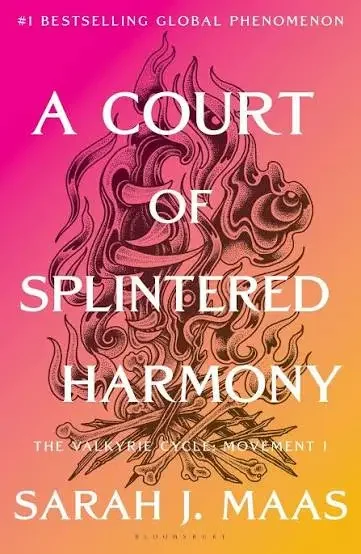
Though a fraction of the story, a theme that piqued my interest was the moral responsibility that nations have for intervening on behalf of other countries’ citizens when rights are being violated. Rhys and Feyre argue over this and position it as an argument over personal legacy: would we rather be alive for our family yet morally bankrupt, or would we rather die righteously and leave our kids alone in this world?
I believe this argument between Rhys and Feyre reveals a theme about power dynamics, segregation, and nationhood—all of which are particularly relevant today. Because she was once human, Feyre feels a special connection to humans and laments at seeing them displaced and their homes conquered by the more powerful Fae. She feels that it would be better to fight for an honorable cause and fail than to look her son in the eyes and explain her cowardice. Although other characters cannot or do not understand Feyre’s conviction, they follow her perspective out of loyalty. Rhys, her closest confidant, however, does not agree and attempts to find a middle ground: building a physical border wall between humans and Faeries.
Fantasy worlds, which often have foundations in the historical and mythological, are playgrounds for crafting subtle narratives that sway cultures. Given Sarah J Maas’s cult following, her stories will have reverberations in the subconscious of modern America—specifically, modern American women. We must ask important questions about this theme, but given that this is the first book in an arc, I don’t believe Sarah J Maas has crafted a conclusive thematic statement for us yet. If you continue reading the series, I encourage you to dive deeper into the text and see what Sarah J Maas is noting on this topic and consider its implications in our broader political context.
Here’s some questions I will ask myself throughout the rest of the series:
Is Feyre’s willingness to fight for humans an expression of empathy, or does she risk imposing her own moral convictions on people whose circumstances she may not fully understand? Does Feyre have a right to do this? In what areas of my own life do I let my desire to be empathetic create oppressive moral certitude?
Much like Rhys and Feyre, those in power have their own families to consider as collateral in national decisions. Am I able to understand governmental characters like Rhys, who want to protect those already in their sphere of influence rather than send their people to fight and die in far-flung wars? Alternatively, at what point does protecting their own people become an excuse for ignoring the suffering of others? Subsequently, does having children change my moral obligations to society? Would becoming a parent push me to be more politically cautious, like Rhys, or boldly humanitarian, like Feyre?
The Night Court is not the most powerful military force in this world; they require alliances with other Courts. Does a nation’s natural military power, or lack thereof, obligate it to intervene on behalf of others? Is it more acceptable for a weaker country to focus on their own interests than a stronger country? Why would the military strength of a country have an impact on the morality of intervening on behalf of people’s rights? What is America’s role in the world, and is that different from what its role should be?
Rhys proposes a border wall as a compromise between himself and his wife, but he also implicitly desires to protect humans from the more powerful, cruel, and monstrous Fae. Is separation ever a legitimate solution to conflict, or does it preserve the conditions that created the conflict? Why would the more powerful feel an obligation to separate themselves from the average person, rather than reforming their ways? Can two populations truly coexist peacefully when one has oppressed the other?
I am not a queen or a king or anyone of influence. Thus, what is the narrative encouraging those outside of government to do concerning these matters of power, segregation, and nationhood? What is the cross-section between those who I can personally aid and what my nation must do on my behalf? As a Catholic, I will be thinking about this in tandem with a doctrine called “ordo amoris,” or the “order of love.” I highly encourage you to research this doctrine further if you are interested.